Design
eyebrow
A Peek Behind the Edges
text-h1
Photographer and designer Blue Carreon shares an inside look at glorious gardens in the Hamptons.
PUBLISHED APRIL 2026 | STORY BY SARAH LIPPERT
PUBLISHED APRIL 2026 | STORY BY SARAH LIPPERT
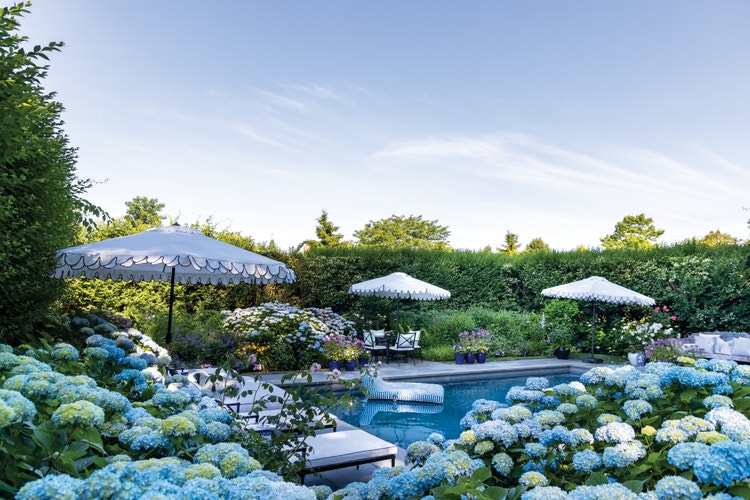
PHOTO BY BLUE CARREON
It’s only natural to wonder what lies beyond the walls of magnificent homes. For Blue Carreon, a New York- and Hong Kong-based journalist, photographer, interior designer, and author, the extensive hedges that obscure the estates of the Hamptons were begging him to take a closer look. His latest book, The Gardens of the Hamptons, was inspired by a desire he admits was initially selfish: he wanted to see the private gardens for himself.
From his initial inspiration, juggling both writing and photography, and battling Mother Nature’s weather curveballs, Carreon shares how this collection of private oases blossomed into something more than he imagined: a photo-filled journey of revealed elegance.
In his newest book, designer Blue Carreon showcases the lush gardens of iconic properties in the Hamptons on New York’s Long Island.
PORTRAIT BY: DOUG YOUNG


The Living Kitchen: What motivated you to write this book? What were your initial goals?
Blue Carreon: I started my first garden in 2015 when I moved to East Hampton. I had the opportunity to visit several friends’ gardens here, plus I’ve spent many weekends driving around these huge estates, craning my neck to try and see what I could glean from the road. I knew that if I wanted to truly experience the vast array of gardens the Hamptons offers, a book that showcased them would be the answer.
One of my main objectives with this book was to capture the different sizes of gardens we have here–it’s actually not just all huge estates. We have gardens the size of a postage stamp, gardens that fill rolling estates, and everything in between. I also wanted to showcase different styles, such as gardens by the sea, more romantic gardens, sculptural gardens, meadow gardens, the list goes on.


PHOTOS BY: BLUE CARREON
true
true
false
true
TLK: How did you decide which gardens to include?
BC: When I started the process, I only knew I had permission to photograph five gardens. I ended up with 40 gardens in total, largely due to word of mouth and referrals. I reached out to various landscape architects and garden designers working in the Hamptons and, fortunately, they were receptive to the idea and gave me access to some of their projects. Members of the Garden Club of East Hampton and the Southampton Rose Society also opened their gardens and referred fellow members. The community was so welcoming throughout the process, and they were excited about the prospect of having a book that represented their members and neighbors.
TLK: You photographed 90 percent of this book yourself. What was that like?
BC: It was fun and exciting because I found myself surrounded by so much beauty. But it was also an exercise in patience. First, the weather posed an ongoing challenge because we can experience all four seasons in a single hour in the Hamptons. I visited most of the gardens several times, both to ensure I had the right lighting and weather conditions, and to capture them throughout the seasons. It took over a year just to get the photos. Second, some gardens are like people: They are stunning in person, but they simply don’t photograph well.

PHOTO BY BLUE CARREON
Sag Harbor resident Anne Tait, and her daughter, Lucia Tait Tolani, under a canopy of crepe myrtle trees in her contemporary garden.
Sag Harbor resident Anne Tait, and her daughter, Lucia Tait Tolani, under a canopy of crepe myrtle trees in her contemporary garden.

true
true
PHOTO BY BLUE CARREON
In Karen Silverman’s oceanfront garden in Wainscott, a path to the beach is surrounded by lush grasses and beach roses.
In Karen Silverman’s oceanfront garden in Wainscott, a path to the beach is surrounded by lush grasses and beach roses.
TLK: This process allowed you access to so many different gardens and their owners. Did you encounter anything that surprised you?
BC: I was pleasantly surprised by the emphasis on sustainability. So many of the gardeners go out of their way to be sure they are planting native plants, which add to the biodiversity and help sustain pollinators. There are so many meadows full of native grasses, as well as groves of wildflowers. While there are plenty of gardens that are about precision and perfection, there are nearly as many that embrace a more natural aesthetic with a prairie-like feel.
The number of owners who tend to their own gardens also surprised me. I found it so inspiring and also interesting that the majority of them had never gardened until they moved to the Hamptons, as I had.
TLK: Did you hit any snags during the process?
BC: The year I started photography for the book was the year that an early frost had killed all the hydrangeas in the Hamptons, which was a huge challenge. How could I make a book about gardens in the Hamptons without the flower this place is synonymous with? I ended up having to make multiple visits to some homes, particularly those that were hydrangea-heavy, to ensure they were included. But as I share in the book, that’s all part of a garden; they are works in progress by their very nature.
TLK: As an interior designer, how are you inspired by the natural elements in gardens, and vice versa?
BC: There is a huge overlap between interior design and gardening for me. Both use many of the same principles: balance, symmetry, texture, and color. I love being in the garden surrounded by flowers because no one is a better colorist than nature. I try to mimic what I see in gardens into interiors by bringing the outdoors in and blurring the lines between the two.
TLK: What’s your favorite part of your own garden?
BC: My favorite part is that it’s mine; I’ve planted every single thing in it myself. And I take care of it myself. I’m always thinking about how I can improve it, so much so that I’m running out of room!
TLK: What feelings do you hope this book elicits for readers?
BC: I hope they get lost in the pages full of beauty and nature, and that the book can be a source of positivity. Some readers may feel motivated to start their own gardens, much like the homeowners and garden enthusiasts in its pages.
Similar Stories
text-h2
DESIGN
eyebrow
Seeing Green
text-h3
Conservatory Craftsmen’s spectacular greenhouses are beautiful year-round sanctuaries for avid gardeners.

third
DESIGN
eyebrow
Testing the Limits
text-h3
Architect Ezra Lee’s family estate in the Utah mountains melds sleek style with a sense of play.

third
PLACES
eyebrow
Tee Time in Dairyland
text-h3
Wisconsin resorts that offer impeccable fairways, deluxe accommodations, and lavish amenities.

third